Why Comparison Matters More Than Speed Alone
Owners often ask for the fastest crew available, and speed does matter when water is actively entering the building. What matters more is whether the crew arriving understands the roof assembly they are about to cut into. A single ply TPO roof, a built up modified bitumen system, an EPDM rubber membrane, and a standing seam metal roof all fail in different ways and require different emergency techniques. A patch that buys you two years on EPDM might delaminate in two weeks on TPO if the wrong adhesive touches it. That is why our phone intake in Thorntown asks about roof type, age, and where the water is appearing inside, before a truck rolls.
The other reason comparison matters is cost predictability. Emergency work carries a premium because crews mobilize off hours, materials get pulled from limited stock, and safety setup on a wet roof takes longer. Knowing the realistic spread between a temporary dry in and a permanent repair lets you decide what to authorize tonight and what to schedule for next week. We walk every client through that math before we start, and we coordinate with your commercial roof inspection records if you have them so we are not guessing about the substrate underneath.
A useful habit for facility managers is to keep a one page roof summary at the front desk: membrane type, install year, last inspection date, manufacturer warranty status, and the location of roof access. When Thorntown Commercial Roofing answers an after hours call from a Thorntown property that has that summary ready, the intake conversation is twice as fast and the crew arrives with the right adhesive, the right fasteners, and the right safety rigging. Properties without that information are not penalized, but the first thirty minutes on site become diagnostic rather than productive.
The Core Comparison
The table below reflects what we see across Thorntown commercial properties in a typical year. The numbers assume an accessible low slope roof between 5,000 and 30,000 square feet, no asbestos abatement, and standard daytime safety requirements. Premiums for after hours, ice conditions, or fall protection rigging on steep slopes can push figures higher.
| Intervention | Typical Use Case | Cost Range | Expected Lifespan | Insurance Treatment |
|---|---|---|---|---|
| Emergency tarp and dry in | Active leak, storm event, after hours call | $650 to $2,800 | 30 to 90 days | Usually covered as mitigation |
| Targeted seam or flashing repair | Isolated membrane failure, pitch pocket, drain edge | $900 to $3,500 | 3 to 7 years | Often covered if storm related |
| Section patch with insulation swap | Wet insulation under 200 sq ft, intact deck | $2,800 to $9,000 | 5 to 12 years | Partial coverage common |
| Partial reroof (zone replacement) | Damage over 500 sq ft, deck mostly sound | $9,000 to $35,000 | 10 to 20 years | Negotiated with adjuster |
| Full membrane replacement | Widespread saturation, end of life system | $45,000 to $250,000+ | 20 to 30 years | Depreciated value, ACV vs RCV |
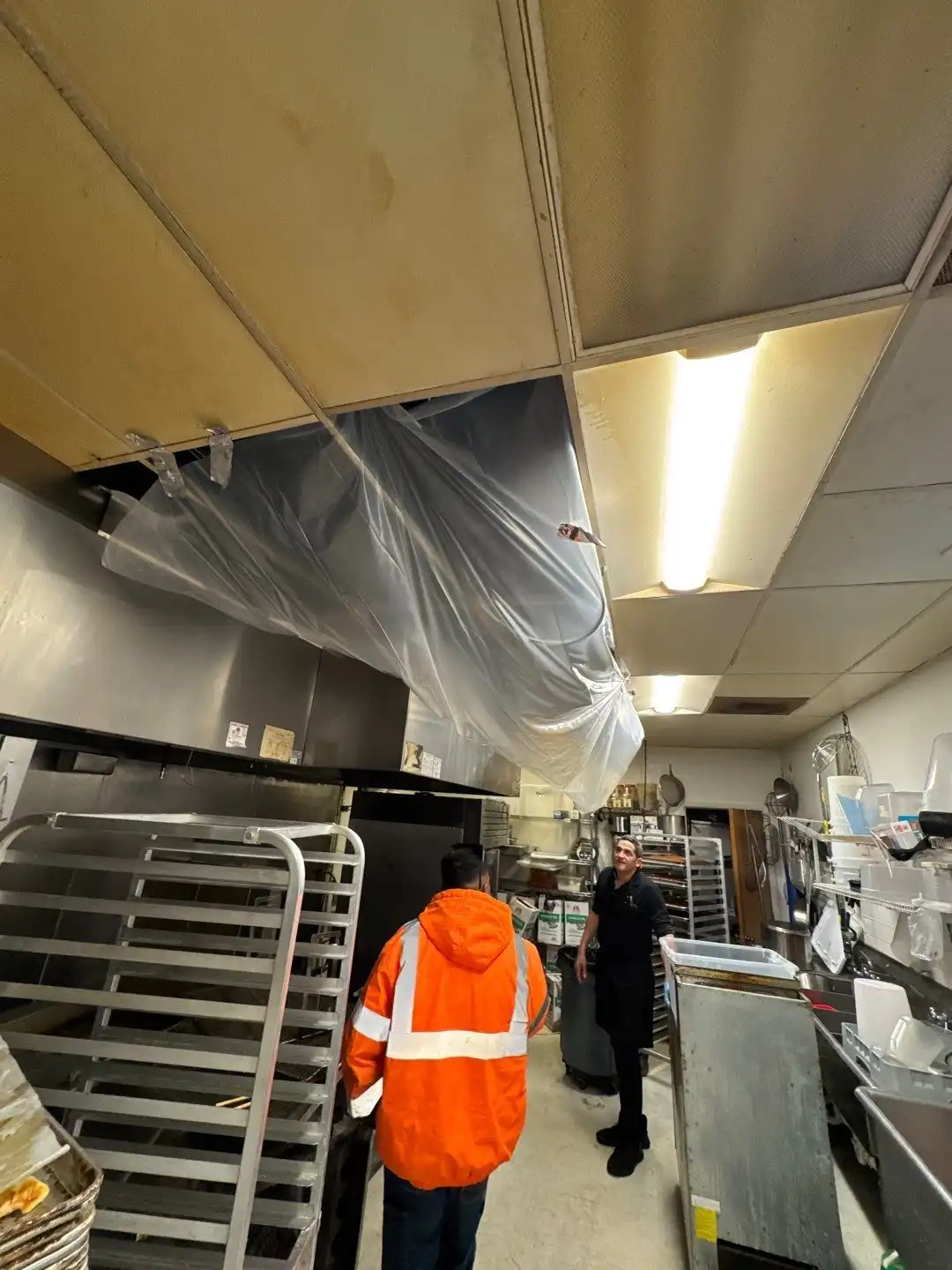
Reading across that table, the pattern that jumps out is the gap between the dry in and the targeted repair. A $1,200 tarp is not throwaway money if it prevents $40,000 in interior damage while you wait for an adjuster. We have walked into Thorntown warehouses where a delayed tarp call turned a single bay leak into a saturated ceiling grid across half the building. The dry in is almost always the right first move when active water is present, even if the permanent fix is still being scoped.
Reading the Comparison Into Your Decision
The implications behind those numbers matter as much as the numbers themselves. First, labor dominates emergency pricing. That is not markup, it is the reality that two or three trained roofers need to set up edge protection, manage wet surfaces, and stage materials safely. When a competitor quotes you a flat $400 emergency call, ask what corners are being cut. Second, the membrane and insulation line items are where roof type drives the spread. TPO and PVC welds need a clean, dry surface, which sometimes means waiting for a weather window or using mechanical fasteners as an interim. EPDM accepts cold applied patches more readily, which is why some Thorntown buildings get same visit permanent repairs while others get dry in plus a return trip.
Third, documentation is not a throwaway cost. When your carrier opens a claim, photos of the failure point, moisture readings on the insulation, and a written scope from the responding contractor are what move the file forward. We coordinate with adjusters directly and can hand off detailed reports that align with your commercial emergency roof repair claim. If a partial reroof becomes necessary, that same documentation supports the argument for replacement cost value rather than depreciated actual cash value, which on a fifteen year old TPO roof can be a difference of tens of thousands of dollars.
Finally, the decision between patching and replacing is rarely binary in the moment. Most Thorntown clients land on a sequence: dry in tonight, scope tomorrow, targeted repair this week, and a planned commercial roof replacement conversation if the membrane is past two thirds of its expected life. That sequence protects the building, preserves the claim, and gives you time to budget properly rather than authorizing a six figure project at 2 a.m.
What Happens After the Tarp Comes Off
One question we field constantly is what the transition looks like between the dry in and the permanent repair. The tarp is engineered as a temporary measure, mechanically fastened or ballasted depending on parapet geometry and wind exposure, and it needs to be inspected after every significant weather event until the permanent work is scheduled. Thorntown Commercial Roofing tracks every active dry in on its own log, and we check back in with the property contact rather than waiting for a second leak call. That follow through is what separates a credible emergency program from a crew that disappears once the invoice clears.