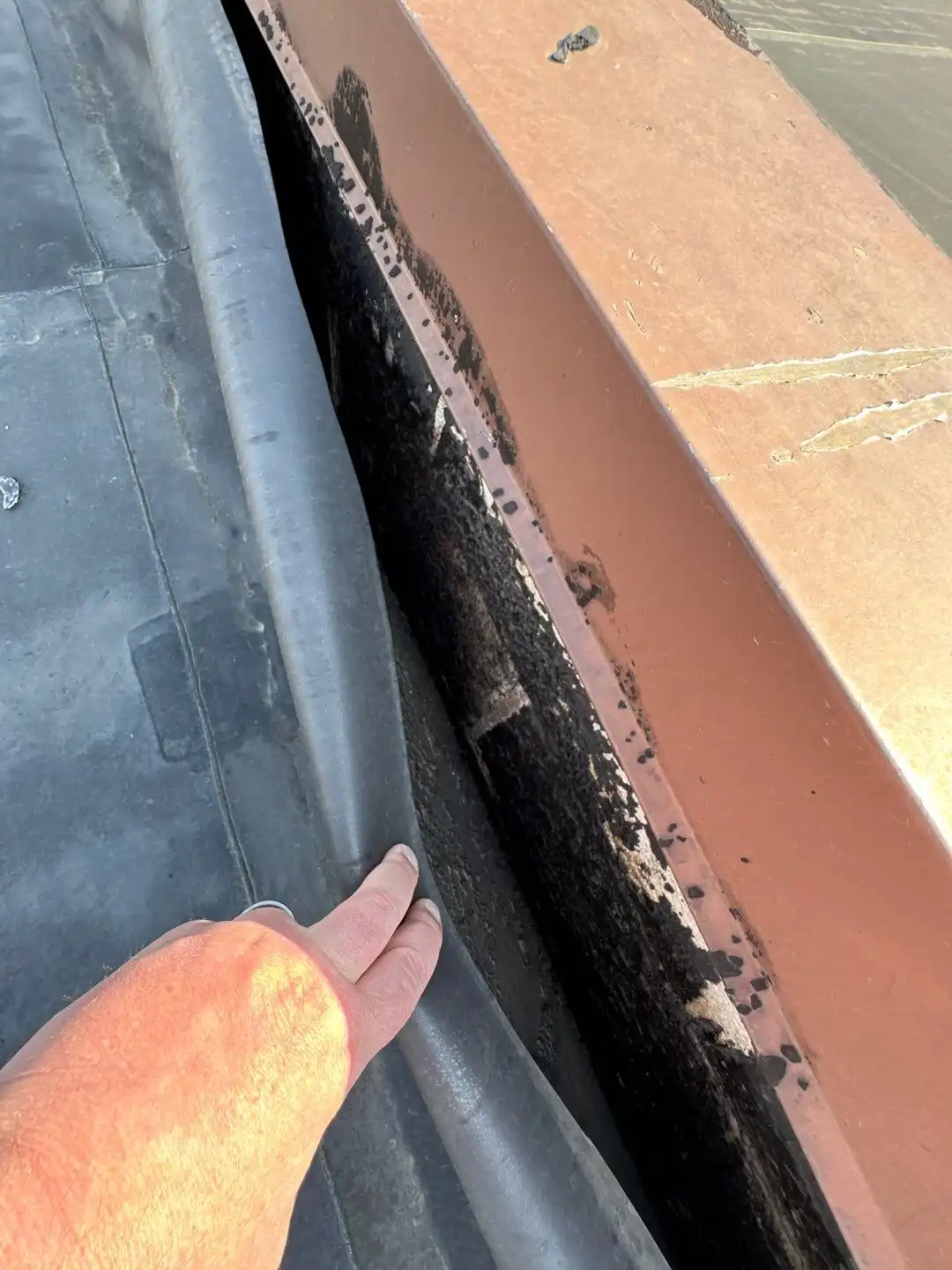
The damage ponding water causes
Understanding the harm ponding does helps a Thorntown owner see why it must be addressed rather than tolerated. Standing water damages a roof in several ways, all of which shorten its life and increase the risk of failure.
Accelerated membrane deterioration
Standing water steadily breaks down roofing membranes over time, with prolonged saturation, UV exposure on wet areas, and the constant moisture accelerating wear. Some membranes are more vulnerable than others, but ponding stresses them all. For a roof, the areas that pond typically deteriorate faster than the rest of the roof, becoming the first places to fail. This accelerated deterioration is a primary way ponding shortens a roof's life, concentrating wear where the water stands.
Increased leak risk
Standing water increases the risk of leaks, because it has more time and opportunity to find any weakness, a slightly open seam, a small membrane flaw, a compromised detail, and penetrate the roof. Water that drains away quickly has little chance to exploit a minor flaw, while water that stands for days does. For a Boone County roof, ponding raises the leak risk significantly, turning minor vulnerabilities into active leaks, which is one of the more immediate dangers of standing water.
Structural strain from weight
Water is heavy, and a significant area of ponding adds substantial weight to the roof, straining the structure, especially if the ponding is already a sign of deflection. This added load can worsen the deflection in a cycle, deeper sagging holding more water adding more weight. For a Thorntown roof, the weight of ponding water is a structural concern that compounds over time, which is part of why ponding should be addressed before the load worsens the underlying deflection.
Other effects
Ponding can also contribute to other problems: it can promote vegetation or algae growth on the roof, leave dirt and debris deposits as it evaporates, and in cold weather, freeze and thaw, adding stress. These secondary effects accompany the primary damage. For a roof, these additional consequences of standing water reinforce that ponding is harmful in multiple ways, all of which argue for correcting it rather than living with it on the roof.
Why ponding must be addressed
The damage ponding causes, accelerated deterioration, increased leak risk, structural strain, and secondary effects, makes clear that standing water is an active threat to the roof, not a harmless quirk. Left unaddressed, ponding steadily shortens the roof's life and raises the risk of failure. For a Boone County owner, understanding this damage is what motivates fixing ponding promptly, since the longer it persists, the more harm it does to the roof.
Stop the damage from ponding
Finally, preventing ponding is far easier than repairing the damage it causes, which makes maintenance and proper drainage design worthwhile investments. A owner who keeps drains clear, monitors the roof for new low spots, and ensures proper slope on any new roof avoids the steady harm standing water does. That preventive attention, keeping water moving off the roof, protects the roof's life at a fraction of the cost of dealing with the deterioration, leaks, and structural strain that ponding eventually brings.
It also helps to address the cause rather than the symptom, because simply removing standing water once does nothing if the drainage failure that created it remains. A Boone County owner who insists on identifying why the roof ponds, inadequate slope, deflection, clogged drains, and fixing that underlying cause gets a lasting solution, while one who only clears the water temporarily will see it return. The effective fix is the one that restores the roof's ability to drain, which is what separates a real solution from a temporary patch.
The broader point about ponding is that it is both a symptom and a cause, a symptom of a drainage failure and a cause of accelerated roof deterioration, which is why it deserves prompt attention. A Thorntown owner who treats standing water as the warning it is, rather than a harmless feature of a flat roof, addresses the drainage problem before it shortens the roof's life. The roofs that reach their full span are the ones whose owners kept water moving off them, which is exactly what fixing ponding accomplishes.
Finally, preventing ponding is far easier than repairing the damage it causes, which makes maintenance and proper drainage design worthwhile investments. A owner who keeps drains clear, monitors the roof for new low spots, and ensures proper slope on any new roof avoids the steady harm standing water does. That preventive attention, keeping water moving off the roof, protects the roof's life at a fraction of the cost of dealing with the deterioration, leaks, and structural strain that ponding eventually brings.
It also helps to address the cause rather than the symptom, because simply removing standing water once does nothing if the drainage failure that created it remains. A Boone County owner who insists on identifying why the roof ponds, inadequate slope, deflection, clogged drains, and fixing that underlying cause gets a lasting solution, while one who only clears the water temporarily will see it return. The effective fix is the one that restores the roof's ability to drain, which is what separates a real solution from a temporary patch.
The broader point about ponding is that it is both a symptom and a cause, a symptom of a drainage failure and a cause of accelerated roof deterioration, which is why it deserves prompt attention. A Thorntown owner who treats standing water as the warning it is, rather than a harmless feature of a flat roof, addresses the drainage problem before it shortens the roof's life. The roofs that reach their full span are the ones whose owners kept water moving off them, which is exactly what fixing ponding accomplishes.
Finally, preventing ponding is far easier than repairing the damage it causes, which makes maintenance and proper drainage design worthwhile investments. A owner who keeps drains clear, monitors the roof for new low spots, and ensures proper slope on any new roof avoids the steady harm standing water does. That preventive attention, keeping water moving off the roof, protects the roof's life at a fraction of the cost of dealing with the deterioration, leaks, and structural strain that ponding eventually brings.
The broader point about ponding is that it is both a symptom and a cause, a symptom of a drainage failure and a cause of accelerated roof deterioration, which is why it deserves prompt attention. A Thorntown owner who treats standing water as the warning it is, rather than a harmless feature of a flat roof, addresses the drainage problem before it shortens the roof's life. The roofs that reach their full span are the ones whose owners kept water moving off them, which is exactly what fixing ponding accomplishes.
Thorntown Commercial Roofing corrects ponding on Thorntown flat roofs to stop the damage standing water causes. Call (765) 676-3491 to stop ponding from shortening your roof's life. Addressing ponding before it does more harm is what separates a smart investment from an expensive guess.